[by Jessica Reilly, ERG Ph.D. student]
“We need to jibe now!” I yell as an animal the size of our 39-foot sailboat crashes into the water a few feet off our starboard beam.
We’re sailing in open water in the Pacific Ocean, off the west coast of Mexico’s Baja peninsula. The wind is blowing a steady twenty knots out of the north, and the boat surfs down rolling five foot ocean swells. But a frisky humpback whale just moved two-thirds of its 70,000 pounds out of the water and into the air—a dumbfounding event that also spells trouble for our boat in the middle of the sea. Crashing with a distracted whale flying through the air is one of our many potential dangers out here.
My partner Josh and I manage to quickly jibe (move the sails from one side of the boat to the other with the wind at our back,) and skirt the breaching whale. We are on our way to Isla Cedros, about halfway down the Baja peninsula. After sailing through the night, we finally “drop the hook” (set our anchor) on the island’s rugged east side.
As we sit in the cockpit in the sun, a bright yellow panga motors into view from the north. A panga is an open boat with an outboard engine, designed by Yamaha in the 1960s to give fishermen access to shallow water while still tough enough to ride over ocean chop. The panga before us is piled four-deep with lobster traps. The fisherman standing at the back motors over and we start to chat.
I learn that this man, Eduardo, has fished here seasonally for twenty-seven years. The racket of elephant seals barking and screaming on the island continues, and Eduardo comments that this is the first year that the elephant seals have come to this part of the island. His style is thoughtful, pensive.
Since he has seen this island and its changes for a while, my interest is piqued. Without any leading words like “weather” or “climate,” I ask, is it different now here, or the same?
He turns his eyes to the sky and purses his lips, carefully considering my question. I lean forward.
Narrowing his eyes, he replies, “Different.”
“There are far fewer lobster now,” he says. “This year, from the effects of El Niño, the water is warmer, which is good for lobster, but generally there are far fewer now.”
His gaze stretches to the shore as he speaks, sifting through his memory. “Much has changed,” he continues. “For example, in 1997, there were three kinds of abalone: white, red, and black. That winter we had an El Niño, and the black—they disappeared.”
“Disappeared?” I respond, surprised.
“Completely,” he answers.
We chat more about life on the island, then he putters slowly away. With only a few simple questions, this man tied to the cycles of climate and weather recalled the changes to which he needed to adapt.
So what happened to the black abalone? To Eduardo, the abalone disappeared because of El Niño, the weather phenomenon created by warmer-than-usual water in the Pacific at the equator. Peruvian fishermen noticed the warm water around Christmas in the late 1800s, thus naming it “El Niño” after the baby Jesus. In 1997, El Niño was credited with disastrous hurricanes in the Pacific and a horrendous winter for northeastern North America, among other weather challenges.
El Niño is a natural phenomenon, but climate change drives the frequency and severity of El Niños. Here’s how this works: the ocean is a lot of water (H2O), absorbed carbon dioxide (CO2) and heat (energy!), and it has been absorbing over 90% of the extra carbon dioxide and heat we humans have added to the atmosphere since 1955 (we went from 280 parts per million of CO2 to 401 ppm today.) If you add heat and/or carbon dioxide to water, it expands. When we're talking about a lot of water, like the Pacific, the heat becomes energy in the form of currents, eddies, and storms.
Hurricanes gain strength with the constant heat and moisture from open water, and they start to lose their energy once over land, in part because they can no longer draw warmth (energy) from the ocean. The hurricane season therefore ends as the water cools for the winter in both the Pacific and the Atlantic. But El Niño keeps the water warmer longer in the Pacific, and this has a global weather (energy) impact.
NOAA, the National Oceanic and Atmospheric Administration, declared in April that El Niño is officially here for 2015—although Eduardo could have told us that back in December, because he was seeing more lobsters and fewer big fish. Back in 1997, he also knew the fishery was different and the water was warmer, and, it seemed to him, a permanent change occurred as the result of that difference.
If you look up the cause of the mortality of the black abalone, you find Withering syndrome, a bacterial infection that causes the foot of the abalone to shrink, thus making it unable to cling to a rock. For this reason, the black abalone is globally listed as critically endangered. So was it just coincidental that they disappeared from Cedros during El Niño?
As with many diagnoses, the answer is more complex than one cause. Black abalone can live in harmony with this bacteria—it doesn’t affect them. However, as soon as the water warms up even a little bit, they are overcome by this bacteria. Therefore, the abalone at Cedros may have been living with the bacteria, but a rise in ocean water temperature—less than four degrees Farenheit—brought about their collapse. Like a murder mystery, the bacteria is the smoking gun, but it was El Niño that pulled the trigger—and Eduardo lives in the neighborhood and can testify as a witness.
Scientists are calling this year’s El Niño “Godzilla,” and compare it to 1997. Already record number and intensity of hurricanes have occurred in the Pacific as the water warms. These changes impact not only the small abalone or the individual fishers like Eduardo, but the largest mammals ever to live on earth: whales. In warmer, nutrient-poor water, whales, like the one we saw breaching in the Pacific, struggle to find enough food. Whether or not we see them, the whales still exist under the surface, adapting or suffering with change.
Much of the time, changes in climate are hidden from everyday view and our lives continue without a breach. But once in a while, these changes explode to the surface to disrupt our view, crashing down with an enormous splash. Indications of these changes are lived and breathed by Eduardo and others who live tied to the coast. We can listen to their observations and take heed of their accounts of the sudden or long-term change. We can learn how to adapt nimbly and with care for our resources. But we must always be on deck to scan the horizon for these events. Eduardo is standing watch at the helm—we just have to listen.
For more on Jessica's posts on the sea, go to her personal website Sailing for Climate here.
Note: The views expressed here belong solely to the author of each entry and are not representative of the position of the Energy and Resources Group, UC Berkeley.
“We need to jibe now!” I yell as an animal the size of our 39-foot sailboat crashes into the water a few feet off our starboard beam.
 |
| ERG graduate student Jess Reilly and partner Josh Moman aboard their research sailboat, Oleada |
We’re sailing in open water in the Pacific Ocean, off the west coast of Mexico’s Baja peninsula. The wind is blowing a steady twenty knots out of the north, and the boat surfs down rolling five foot ocean swells. But a frisky humpback whale just moved two-thirds of its 70,000 pounds out of the water and into the air—a dumbfounding event that also spells trouble for our boat in the middle of the sea. Crashing with a distracted whale flying through the air is one of our many potential dangers out here.
My partner Josh and I manage to quickly jibe (move the sails from one side of the boat to the other with the wind at our back,) and skirt the breaching whale. We are on our way to Isla Cedros, about halfway down the Baja peninsula. After sailing through the night, we finally “drop the hook” (set our anchor) on the island’s rugged east side.
 |
| A view from an unnamed canyon on Isla Cedros back to our boat, Oleada. The name means wave, swell, or uprising |
As we sit in the cockpit in the sun, a bright yellow panga motors into view from the north. A panga is an open boat with an outboard engine, designed by Yamaha in the 1960s to give fishermen access to shallow water while still tough enough to ride over ocean chop. The panga before us is piled four-deep with lobster traps. The fisherman standing at the back motors over and we start to chat.
I learn that this man, Eduardo, has fished here seasonally for twenty-seven years. The racket of elephant seals barking and screaming on the island continues, and Eduardo comments that this is the first year that the elephant seals have come to this part of the island. His style is thoughtful, pensive.
 |
| A curious visitor to the boat on Cedros |
Since he has seen this island and its changes for a while, my interest is piqued. Without any leading words like “weather” or “climate,” I ask, is it different now here, or the same?
He turns his eyes to the sky and purses his lips, carefully considering my question. I lean forward.
Narrowing his eyes, he replies, “Different.”
“There are far fewer lobster now,” he says. “This year, from the effects of El Niño, the water is warmer, which is good for lobster, but generally there are far fewer now.”
His gaze stretches to the shore as he speaks, sifting through his memory. “Much has changed,” he continues. “For example, in 1997, there were three kinds of abalone: white, red, and black. That winter we had an El Niño, and the black—they disappeared.”
“Disappeared?” I respond, surprised.
“Completely,” he answers.
We chat more about life on the island, then he putters slowly away. With only a few simple questions, this man tied to the cycles of climate and weather recalled the changes to which he needed to adapt.
 |
| Pangas anchored in the harbor at the only town on Isla Cedro |
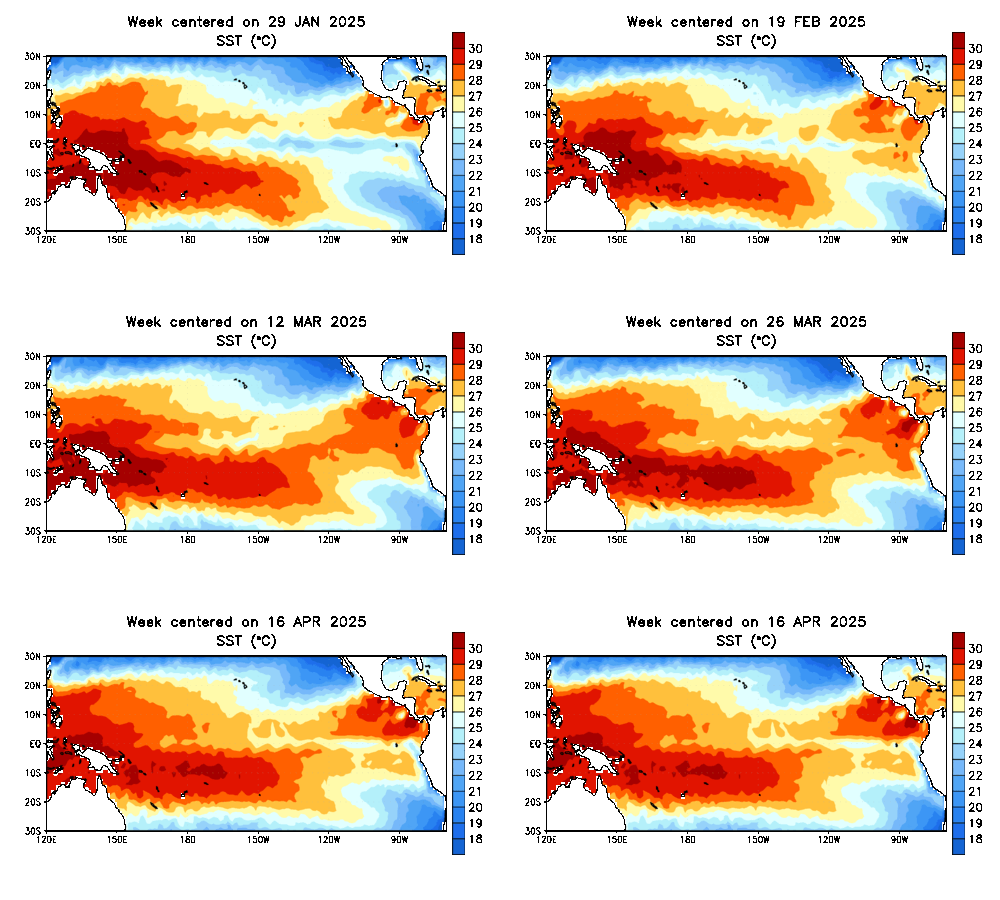
So what happened to the black abalone? To Eduardo, the abalone disappeared because of El Niño, the weather phenomenon created by warmer-than-usual water in the Pacific at the equator. Peruvian fishermen noticed the warm water around Christmas in the late 1800s, thus naming it “El Niño” after the baby Jesus. In 1997, El Niño was credited with disastrous hurricanes in the Pacific and a horrendous winter for northeastern North America, among other weather challenges.
El Niño is a natural phenomenon, but climate change drives the frequency and severity of El Niños. Here’s how this works: the ocean is a lot of water (H2O), absorbed carbon dioxide (CO2) and heat (energy!), and it has been absorbing over 90% of the extra carbon dioxide and heat we humans have added to the atmosphere since 1955 (we went from 280 parts per million of CO2 to 401 ppm today.) If you add heat and/or carbon dioxide to water, it expands. When we're talking about a lot of water, like the Pacific, the heat becomes energy in the form of currents, eddies, and storms.
Hurricanes gain strength with the constant heat and moisture from open water, and they start to lose their energy once over land, in part because they can no longer draw warmth (energy) from the ocean. The hurricane season therefore ends as the water cools for the winter in both the Pacific and the Atlantic. But El Niño keeps the water warmer longer in the Pacific, and this has a global weather (energy) impact.
NOAA, the National Oceanic and Atmospheric Administration, declared in April that El Niño is officially here for 2015—although Eduardo could have told us that back in December, because he was seeing more lobsters and fewer big fish. Back in 1997, he also knew the fishery was different and the water was warmer, and, it seemed to him, a permanent change occurred as the result of that difference.
If you look up the cause of the mortality of the black abalone, you find Withering syndrome, a bacterial infection that causes the foot of the abalone to shrink, thus making it unable to cling to a rock. For this reason, the black abalone is globally listed as critically endangered. So was it just coincidental that they disappeared from Cedros during El Niño?
 |
| The magically iridescent interior of a red abalone, a species still harvested in Baja |
As with many diagnoses, the answer is more complex than one cause. Black abalone can live in harmony with this bacteria—it doesn’t affect them. However, as soon as the water warms up even a little bit, they are overcome by this bacteria. Therefore, the abalone at Cedros may have been living with the bacteria, but a rise in ocean water temperature—less than four degrees Farenheit—brought about their collapse. Like a murder mystery, the bacteria is the smoking gun, but it was El Niño that pulled the trigger—and Eduardo lives in the neighborhood and can testify as a witness.
Scientists are calling this year’s El Niño “Godzilla,” and compare it to 1997. Already record number and intensity of hurricanes have occurred in the Pacific as the water warms. These changes impact not only the small abalone or the individual fishers like Eduardo, but the largest mammals ever to live on earth: whales. In warmer, nutrient-poor water, whales, like the one we saw breaching in the Pacific, struggle to find enough food. Whether or not we see them, the whales still exist under the surface, adapting or suffering with change.
 |
| From CPC |
Much of the time, changes in climate are hidden from everyday view and our lives continue without a breach. But once in a while, these changes explode to the surface to disrupt our view, crashing down with an enormous splash. Indications of these changes are lived and breathed by Eduardo and others who live tied to the coast. We can listen to their observations and take heed of their accounts of the sudden or long-term change. We can learn how to adapt nimbly and with care for our resources. But we must always be on deck to scan the horizon for these events. Eduardo is standing watch at the helm—we just have to listen.
 |
| Although I didn’t get a photo of Eduardo, I caught this shot of Don Jose in La Paz. He’s a lifelong fisherman who used to fish by sail. His stories of changes over time have real meaning for the scientific community |
For more on Jessica's posts on the sea, go to her personal website Sailing for Climate here.
Note: The views expressed here belong solely to the author of each entry and are not representative of the position of the Energy and Resources Group, UC Berkeley.