Showing posts with label faculty. Show all posts

3.26.2015


[Patricia Hidalgo-Gonzalez, ERG graduate student]

Insights from ERG core and affiliate faculty – Duncan Callaway, Severin Borenstein and Dan Kammen.

Two years ago a friend of mine asked me about choosing a job. She just got her bachelor's degree and was wondering what to do next. Yes, during that time when you have all the choices in the world and you don't know which to pick, she really wanted to work toward something she loved, but she was  puzzled about what her true passion was.

In what ways do researchers feel that love for their work? How do they define "being in love with their jobs"? I wanted to see that look in their eyes when they talk about "the love of their life."
All I could say was, "Find a job that you feel so passionate about that you would even do it for free — a job where you would wake up every morning and feel like the luckiest person in the world." In essence,  I was saying, Find the love of your life — as far as jobs go. So… no big deal. (Ha!)  After giving her that idealistic and hippie-esque definition of what a perfect job was, I actually had no clue how to properly respond to her. In the end, I told her she would have to take a rain check in order to get a real answer from me in the future. Yes. I know. Thanks for such great advice?

Explaining what it feels like when you find a perfect job challenged me. I believed that this was analogous to falling in love with someone. It’s hard to explain in concrete terms, so when you try to define it, it just sounds out of this world, unrealistic, and it doesn't make sense unless the person you are talking to has also fallen in love. And in that case, you wouldn't even need to be talking about the definition of falling in love because both parties in the conversation would already know. So how can this be explained?

Recently, I started to think about how researchers experience this "love." In what ways do researchers feel that love for their work? How do they define "being in love with their jobs"? I wanted to see that look in their eyes when they talk about "the love of their life." I wanted to see how their spirits lit while talking about their favorite job. In summary, I wanted to hear what it means to be in love — in concrete terms — for a researcher.

Luckily enough, three renowned researchers agreed to reveal their secrets to me about this love. ERG core faculty and affiliate faculty members Duncan Callaway, Severin Borenstein and Dan Kammen talk with me about their dream jobs.
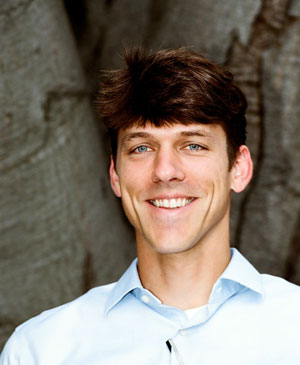
Duncan Callaway

I sit down and ask professor Duncan Callaway, "What are your favorite things about doing research?" While thinking about his answer, Duncan can't hide a big smile (which I don't think he notices). It seems like he is about to talk about his wife, but no, he starts talking about his job, sharing his favorite things about research:

You don't know if you will make a big impact, but just to have the chance is a great privilege.
  • Working with great students: Duncan feels privileged to have the opportunity to work with great students.
  • Moments of discovery: Duncan describes research as an ongoing path of progress without knowing what you will discover, and then suddenly — boom! — something clicks and you discover a new idea.
  • Making a contribution: For Duncan, the feeling of contributing with new knowledge is indescribable. He feels privileged to have the chance to contribute in a field that he feels passionate for. The potential of making a fundamental change in the field is very attractive.

For Duncan, the potential that research gives you to make a change and have a big impact is extremely attractive, but at the same time it is its highest risk. When you work, for example in industry, the expected value of your contribution is known and considerably. In research, the standard deviation is huge. You don't know if you will make a big impact, but just to have the chance is a great privilege.
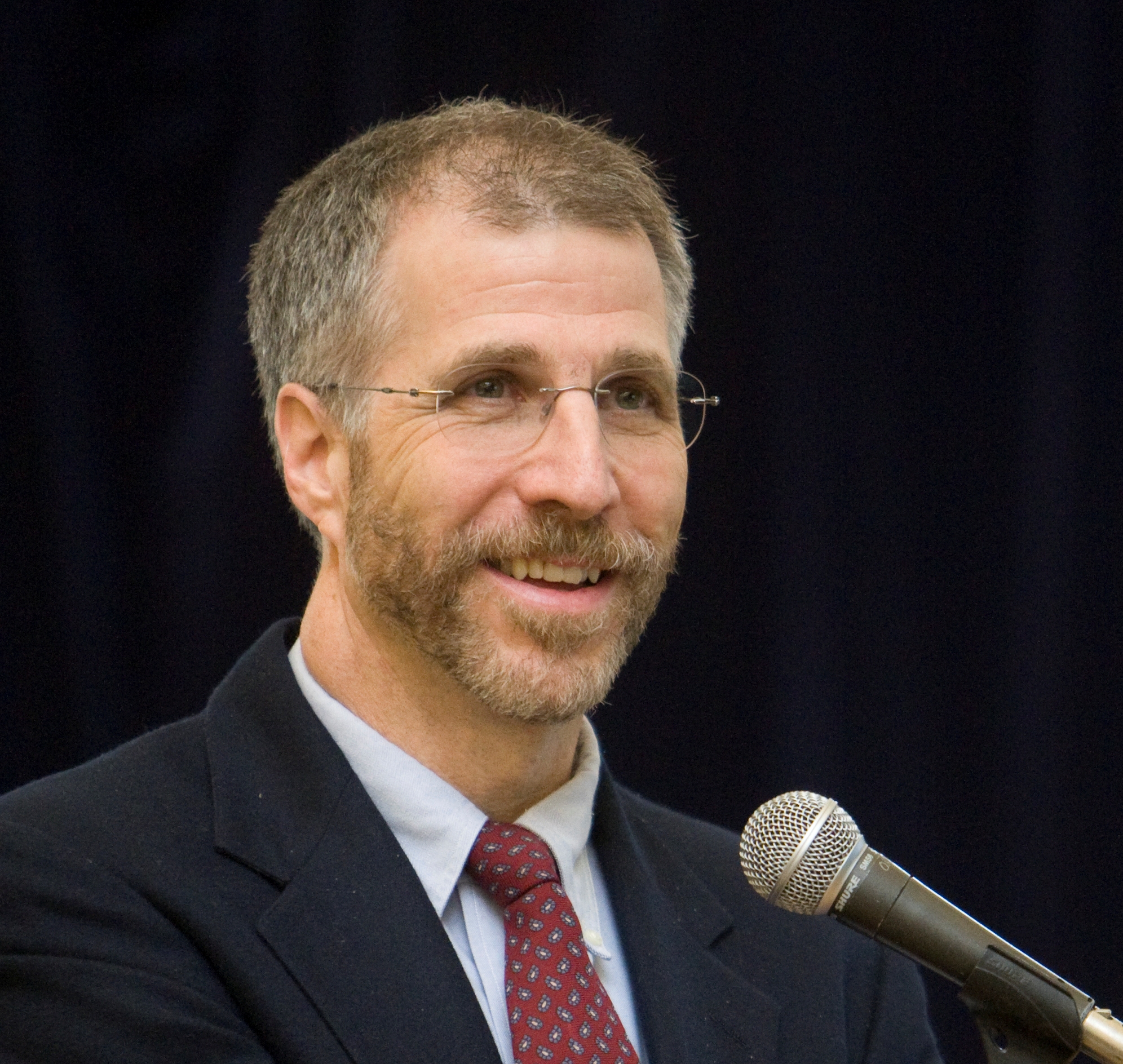
Severin Borenstein

I ask professor Severin Borenstein for his favorite things about research, and he starts to remember his favorite discoveries with great excitement. He loves the surprise of discovering something new. He mentions how entertaining it was for him when he realized that airlines were exercising market power, or similarly, when he discovered in the late 90's how utilities were also exercising market power in the energy sector; however — Severin adds jokingly — at first people were not very happy with this discovery.

"In research you need to be humble. Sometimes your ideas will be wrong, but being open to new ideas will let you discover great things"
For Severin, research is all about the unexpected discoveries. He highlights that he prefers research as a means to find new things rather than to prove something. This later approach can prevent us from being open to new ideas. "In research you need to be humble. Sometimes your ideas will be wrong, but being open to new ideas will let you discover great things," advises Severin.

Severin also immensely enjoys the fact that he can communicate his research to the public. He feels privileged to work in a field where people can relate to his findings and realize the impact in their daily lives.

Severin also confides to me his love for writing code in STATA. He loves teaching, but when the summer comes and he has a full season to get things done, he just can't help get very excited!

Daniel Kammen

Dan Kammen's favorite things about research are:

  • Not knowing where your research will take you: Similar to Duncan's and Severin's views, researching and not exactly knowing what you will end up discovering is an exciting feeling.
  • Working with great students: Dan feels highly motivated by how his students shape the path of their research and bring key questions to their work.
  • Working on key topics: He really enjoys working on topics that are of great importance for society.

"Do not believe what people say about a certain problem being solved or being too difficult to work on. Just work on what looks interesting to you and results will fall in place."
For Dan, being willing to learn new things is key. He recalls how some years ago his group didn't have strong expertise in power systems, nevertheless they developed the SWITCH model. Thus, a willingness to start working on a new project led them to great success.

While performing research, according to Dan, you need to have both patience and faith. The tools that you learn will be useful and your research will lead somewhere. You just need to have faith.
In terms of what you shouldn't do as a researcher, Dan says, "Do not believe what people say about a certain problem being solved or being too difficult to work on. Just work on what looks interesting to you and results will fall in place."

Overall, Duncan, Severin and Dan seem to agree on several items about what it means to be a researcher and why they are in love with it. However, what stood out to me is how they define success in research. On one side it’s successful as it contributes toward solutions to solve energy and environmental problems, but it’s also successful if you enjoy the process of discovery.

So... how can you explain the feeling of being in love with research? From these conversations, I conclude that the core of that love comes from that moment of discovery — that's the unexpected beauty of it. "And that moment can change your perspective about the world," says Severin Borenstein.


A huge thanks to Duncan, Severin and Dan for squeezing me in their busy schedules to talk with me about their love of research.

Top Photo: Vivek Jena


Note: The views expressed here belong solely to the author of each entry and are not representative of the position of the Energy and Resources Group, UC Berkeley.

12.09.2013

Op-ed by Dan Kammen
Published in Daily Californian

Today, UC Berkeley and most institutions are financially invested in destroying our future.

This may sound a little bit surprising to some — even unfounded. Let me explain. When it comes to climate change, the scientific community has presented a clear, unambiguous message: Human burning of fossil fuels — coal, oil and natural gas — is putting our world at risk.

And this, in fact, is a needless risk. By immediately reducing greenhouse gas emissions, we can reduce the damages that we are currently on the path to creating. Typhoon Haiyan, Hurricane Sandy, Hurricane Katrina and many of the costly recent fires and droughts around the world have been exacerbated — caused, to one degree or another, by the changes in the climate that our reliance on fossil fuels has caused.

Credit: Graham Haught, Daily Californian.

Though UC Berkeley and the UC system are leaders in addressing the climate crisis through groundbreaking research and education, the companies they have invested in continue to leave a significant “carbon signature” on the environment. Many of these investments were made before the full impact of these choices on the climate was clear. Continuing the financial investment in companies like Exxon, Chevron and ConocoPhillips — even though some of these companies have made a start in greening their portfolio — sends the wrong message. These companies, and many more, have the capacity and the opportunity to evolve from stalwarts of the old energy order that must change, into supporters of a new clean-energy system that California and the world desperately need.

The 200 largest fossil fuel companies hold, in the form of projects and assets, about five times the amount of carbon in their reserves that the scientific community has deemed responsible to even consider burning in order to avert runaway climate change. The several thousand researchers on the Intergovernmental Panel for Climate Change have determined with greater than 95 percent certainty that human activity is currently causing climate change. Researchers from across the entire UC system and our state government are critical leaders in efforts to advance both climate science and climate solutions, as well as the adaptation side of the equation.

The overwhelming majority of major energy companies, however, has shown far too few signs of transitioning to low-carbon projects. The fossil fuel industry collectively spends more than $600 billion per year exploring for new hydrocarbons and, in some cases, very significant amounts of money on climate denial, lobbying Congress to maintain fossil fuel subsidies and other efforts that work against the needed and feasible clean-energy transition. These companies are publicly traded and investor-owned, supported in large part by institutional investors like UC Berkeley and the University of California.

Instead of funding the problem, we should be investing in solutions that at once aid the transition to a low-carbon economy and grow our university’s bottom line. There is no lack of financially and environmentally sustainable reinvestment opportunities; as of yet, there is only a lack of leadership.

UC Berkeley has played a vital role as a leader in financial and social accountability. When other institutions refused, the campus listened to its students and the international calls for divestment from companies tied to grave social harm and injustice. As was similarly expressed during the South Africa, Sudan and tobacco divestment campaigns, students at UC Berkeley believe that their campus’s investments should reflect its values of social responsibility and environmental sustainability.

In the case of fossil fuel investments, divesting is not only the moral thing to do but is also financially prudent. As fossil fuel companies continue expanding their search for more hydrocarbons, the world’s carbon budget is shrinking. From Canadian tar sands to shale oil, the ”bottom of the barrel” is proving to be increasingly dirty. When government regulation aligns with this reality — and it must — the vast majority of reserves will have to stay in the ground unburned, rendering them stranded assets. Remaining invested in fossil fuels is a bad bet all around.

With a new chancellor at UC Berkeley and a new UC president, both of whom are leaders in clean energy and climate protection, divestment at UC Berkeley and across the UC system will send a resounding message that the university takes all facets of its leadership position seriously. It will also encourage other institutions to do the same and build pressure for regional and global climate action.

As a faculty member who understands deeply the challenge climate change poses and the urgency with which action must be taken, I call on my fellow faculty to stand with the students of Fossil Free Cal and Fossil Free UC in calling on Chancellor Dirks, President Napolitano and the president of the Berkeley Foundation to be on the right side of history by moving our endowments away from fossil fuels and reinvesting in a sustainable future. Visit fossilfreecal.org and sign on if you are as concerned as I am.

The views expressed here belong solely to the author of this entry and are not representative of the position of the Energy and Resources Group, UC Berkeley.

6.11.2013

By Tanya Dimitrova

Our cohort's Talent Show last month was a very special event for me. (And I believe for a lot of other people too.) :)

I have to admit that organizing it was... tiny little bit slightly challenging. ERG's Annual Talent Show is conceived as a team building event for each cohort in their first year, so the entire class had to contribute is some way. This was not my show.

But it's not just that, there is also stage fright to be defeated, and priorities to be rearranged. After all, who has time to think about a talent show when John Hart's ER102 problem sets are due every week!

Just when I was about to give up (roughly two weeks before the date), things suddenly started coming together! Right in the middle of preparation for finals, the cohort discovered new motivation and we started bouncing ideas off each other.

The day of the Talent Show itself was... pure magic. We put everything together as a team more or less in the last minute, and we all felt... inspired.

Thank you class, from the bottom of my heart.

Yours truly,

Tanya

Dimitry was the best MC EVER! Totally ad-lib-ed the whole thing, but made it seem smooth...

I didn't know that one of John's many talents was poetry writing...

This is what Dick's primary activity after his retirement would look like... ;)

The audience felt inspired too and everyone was dancing!

A remix of Price Tag and Under the Bridge, dedicated to Dick. Check out the lyrics at the end of this post.

Josiah's legendary performance...

We tried to make Dick feel right at home: camping on the 8th floor of Barrows!

A glimpse of our Rock opera - tribute to Dick (check out the lyrics below). FYI, Dimitry is a bus driver!

The incredible class of 2012.

Dick abandoning colors yet again!

Thank you Sharada for being ERG's official and most talented photographer and donating this beautiful album to us! :) (The full album is available here.)

This is the only video available for now. More to come later and I will share them as soon as I have them. This is ERG Salsa Social team! I am extremely proud of each and every one of these dancers!

The one thing Dimitry forgot to mention when he was introducing us, was that this ENTIRE dance was pure improvisation, not a choreography! It is called Rueda de Casino and is typical for Cuban salsa!
 

We didn't know what was coming next, as it was being made up on the moment by the person calling the rueda. All the more reason to be proud! :)

And finally, here are the remixed songs we sang in honor of Dick.

Price Tag 
Original lyrics by Jessie J and B.O.B.

Seems like everybody's got a price,
I wonder how they sleep at night. 
When the sale comes first,
And the truth comes second,
Just stop for a minute and smile.
Why is economics so serious
Acting so damn mysterious
You got your price on your mind
And your value so high
That you can't even have a good time

Everybody look to their left
Everybody look to their right
Can you feel that we'll pay them with love tonight...

It's not about the money, money, money
We don't need your money, money, money
We just wanna make the world dance, 
Forget about the price tag.

We need to take it back in time, 
When value made us all unite!
It wasn't low blows and video hoes, 
Am I the only getting tired?
Why is everybody so obsessed?
Money can't buy us happiness.
If we all slow down and enjoy right now
Guarantee we'll be feelin' all right.

We'll keep the supply/ we won't take the demand
Just give me the IPCC/ and we'll make a plan
Put in some carbon tax/ give us all the facts
And all I need is to take a stand
And guess what, this year he's retiring hard
He's leaving across these undefeatable odds
It's like this man, you can't put a price on life.
We do ERG for the love and we sacrifice every night
So we ain't gonna stumble and fall never
Waiting to see a sign of defeat uh-uh
So we gon keep everyone moving their feet
So bring back the beat and everybody sing
It's not about the money, money, money...

~~

We will rock you... tribute to Dick Norgaard
Original lyrics by Queen

[Protesting crowd in the 60s]

Buddy you're a spray man bug man
making all the poison going up in the air today
You got mud on your face
You big disgrace
Overexposed all over the place

We will we will block you

Buddy you're a water man dam man
Killing all the fish in the river and the streams today
You got blood on your face
You big disgrace
Sucking it dry all over the place

We will we will block you

Buddy you're an oil man tar man
Drilling those fields and spilling in the gulf today
You got mud on your face
You big disgrace
Spewing your gas all over the place

We will we will block you

Buddy you're a delta man, pipe man
Seeing all the streams running low
Can really wreck your day.
All these silos must be 
Run differently
Try interdisciplinarity!

We will we will block you

[Change in scene. Wearing black, present times.]

I've paid my fees
Time after time
I've done my homework
And submitted online

And bad mistakes 
I've made a few
There are lots of things fucked up on this earth
We've got shit to do

We are the ERGies, my friends
And we'll keep on fighting till the end
We are the ERGies
We are the ERGies
No time for losing
Cause we are the ERGies - save the world!

I've got big goals
And my Macbook Pro
You brought me drive and insight and everything that goes with it. 
I thank you all.

But it's been no bed of roses
No pleasure cruise
I consider it a challenge before the whole human race
And I ain't gonna lose

We are the ERGies, my friends
And we'll keep on fighting till the end
We are the ERGies
We are the ERGies
No time for losing
Cause we are the ERGies - save the world!

I will post the videos here as they become available

THE SPIRIT DANCE

THE TURTLE KING
WATCH THE HIGHLIGHTS OF THE SHOW HERE:

6.03.2013


by Daniel M. Kammen

We generally complain that action on climate change is mired in polarized partisan politics and thus nothing can be done.  True to an extent, but lets hold on a bit. 

In terms of generating important discussion about the clarity that exists around the conclusion that the scientific debate over climate change as an anthropogenic process is over, the political bully pulpit can be incredibly powerful.

A case in point is the paper published last week in Environmental Research Letters, where I am the Editor-in-Chief, “Quantifying the consensus on anthropogenic global warming in the scientific literature” (Cook, et al., 2013) with the abstract:

We analyze the evolution of the scientific consensus on anthropogenic global warming (AGW) in the peer-reviewed scientific literature, examining 11 944 climate abstracts from 1991–2011 matching the topics 'global climate change' or 'global warming'. We find that 66.4% of abstracts expressed no position on AGW, 32.6% endorsed AGW, 0.7% rejected AGW and 0.3% were uncertain about the cause of global warming. Among abstracts expressing a position on AGW, 97.1% endorsed the consensus position that humans are causing global warming. In a second phase of this study, we invited authors to rate their own papers. Compared to abstract ratings, a smaller percentage of self-rated papers expressed no position on AGW (35.5%). Among self-rated papers expressing a position on AGW, 97.2% endorsed the consensus. For both abstract ratings and authors' self-ratings, the percentage of endorsements among papers expressing a position on AGW marginally increased over time. Our analysis indicates that the number of papers rejecting the consensus on AGW is a vanishingly small proportion of the published research.
The paper came out, and President Barack Obama then tweeted:

@BarackObama: Ninety-seven percent of scientists agree: #climate change is real, man-made and dangerous. Read more: http://OFA.BO/gJsdFp


Follow-on tweets came from Vice-President Al Gore and U. S. Congressman Henry Waxman.  Television coverage followed in: ABC Lateline, Al Jazeera (Inside Story), CNN International, Democracy Now, and NRK. At last count there were over 200 newspaper and magazine pieces, and a number of radio segments.  At last count there were several hundred blog posts on the findings of this paper and the Obama Tweet.  A link to the ever-growing set of media coverage is: http://sks.to/tcpmedia.
The article has been downloaded over 21,600 article downloads in just a few days of having the paper published online.
What this story highlights – beyond the excellent data collection, analysis and scholarship in the paper itself – is the value of thoughtful comments and recognition of these findings.
 
Photo credit: Mashable.com
Daniel M. Kammen is the Distinguished Professor of Energy at the University of California, Berkeley, where he founded and directs the Renewable and Appropriate Energy Laboratory (http://rael.berkeley.edu).   Kammen is a Coordinating Lead Author for the Intergovernmental Panel on Climate Change, which shared the 2007 Nobel Peace Prize.  Kammen the Lead Scholar for the Fulbright NEXUS program in energy and climate for the U. S. Department of State.

References:

John Cook, Dana Nuccitelli, Sarah A Green, Mark Richardson, Bärbel Winkler, Rob Painting, Robert Way, Peter Jacobs and Andrew Skuce (2013) “Quantifying the consensus on anthropogenic global warming in the scientific literature”, Environmental Research Letters, 8 (2).
            http://iopscience.iop.org/1748-9326/8/2/024024/article

5.29.2013

By

This article originally appeared on the Berkeley Energy & Resources Collaborative blog on 8 May 2013

“I love water,” said Dick Norgaard, the legendary Energy and Resources professor, beginning his last class at UC Berkeley, and reflecting on a lifetime of water policy work.  “We need water, and I’ve been obsessed with water since I was a small child.”

For his last class, or as he put it, his “last, last, last class,” he was taking his California Water Policy & Society students out to the sun-dappled porch behind the Graduate Assembly.  His final class, “or at least the last class on payroll,” was to be a combination nuts-and-bolts review for the final and set of ruminations on his career and the future.

Norgaard in Glen Canyon, one of many river haunts

Professor Norgaard has taught at Cal for over forty years, beginning his career in Agricultural and Resource Economics, but transitioning to the interdisciplinary Energy and Resource Group starting in the 1980s.  He actually went to Berkeley for his bachelors (in economics), and, surprising given his fairly left-wing views on environmental economics and policy, received his Ph.D. in economics from the University of Chicago in 1971.  He’s also a veteran river-runner, having piloted rafts down some of the roughest rapids in rivers all across the Western United States.

Perhaps the most prominent name at UC Berkeley in the realm of water policy, Professor Norgaard has served on a “what’s-what” of important scientific advisory boards over the past few decades, including the Intergovernmental Panel on Climate Change and the Millenium Ecosystem Assessment, to name two.  Having authored or co-authored four books and over a hundred journal articles, he’s amongst the most cited economists in the world, and was elected as a Fellow by the American Association for the Advancement of Science in 2007.

His role as the Chair of the Independent Science Board for the Delta Stewardship Council seems to be most dear to his heart.  This role is perhaps where he made his greatest mark late in his career, overseeing the State of California’s official effort at determining the scientific basis for any future San Joaquin – Sacramento Rivers Delta plans.  He becomes animated when speaking about the Delta, his eyes lighting up behind his tinted indoor glasses, his upper body lurching forward when he wants to emphasize a point.  He led his class on two field trips this semester, wild sprawling road voyages through the levees and farmland of the Delta, examining dredges, levee breaks, land subsidence, and all the other tangible realities that lie behind the abstract policy that was the focus of the class.

As he was grilling his class for the review, however, it became clear that the same topic could send him into despair, wringing his hands as he describes the painfully slow machinations of the politics-science nexus.  “We’re setting up windmills that we’re then fencing with,” he said in a moment of frustration over the roundabout policy battles fought in the institutions of resource management.

Professor Norgaard is a humble man, almost to a fault: when described as the leading expert in California water policy (an difficult to debate statement), blushes and looks at the ground, clearly uncomfortable with the praise.  He wears, every day, without fail, a black button down shirt and black jeans, a custom he adopted when George W. Bush was elected to a second term in office in 2004.  “That election made me think that we live in a dark, dark world, and I wanted to dress to reflect that,” he ribbed when a student inquired about his ever-constant wardrobe earlier in the semester.

The final exam review slowly turned into broader, more philosophical questions, as students tried to take advantage of one last opportunity to get in a question.  His somewhat brooding personality came through in his answers, particularly about the ecological mess that his generation is passing off to the next.  “We’ve so disturbed the system that we need to constantly be counter-disturbing it just to keep things afloat.”  A frightening prognosis from a man who should know.  And yet, when asked to reflect on his own career, he sounded an inspirational note, citing passion, determination, hard work, and a deep and abiding love for the environment as the sources of his success.  He encouraged his students to fight for what they believe in doggedly, a heartening directive to a room full of future policy-makers.

Professor Norgaard is retiring this spring, taking time to finish a few books and maybe run a river or two.  But while he may be done teaching at Cal, he will continue his environmental career with the many scientific boards he sits on.  His voice will be missed in the halls of the Energy and Resources Group at Cal, but will continue to be important to the ongoing work of water policy in California.
 
© ERG. Design adapted from Main-Blogger Blogger Template.