
Showing posts with label Diversity. Show all posts

11.16.2018

[Christian G. Miller, ERG graduate student]

Photo credit: Garima Srivastava

This Life@ERG blog post is... uh, well overdue. I promised I would submit one a year ago. I think the hesitation to write came from the difficulty in deciding which facet of my life I should discuss. And in pure procrastination fashion, instead of facing my roadblocks, I about-faced and marched towards a myopic whirlwind of anime and kicking it with mis amigos.

Now after such and such, here we are. I’ve decided to write about a concept that has grabbed at my consciousness at a couple points of extrospection. One point comes from reflection at the punctuation of my academic career (I graduate this coming May), remembering the fact that I was often one of the few -- or even the only -- black person or person of color in the room. The second comes from observation of the current U.S. Congress and what these midterms election meant for the future of our democracy.

The idea picking at me, as you may have guessed, is that of underrepresentation, or its more underrated co-star, overrepresentation. These may seem like two sides of the same coin. But focusing on underrepresentation breeds tokenism, whereas focusing on overrepresentation highlights the structural, systematic unbalance in society. I'm also an energy nerd, so I can't help but draw an analogy between the two: Is there something we can learn about representation from our energy mix?

An Example

Two years ago, I worked as a summer fellow for a CPUC commissioner. I had tried again and again to get a position with a commissioner who was an ERG alum, and a black woman no less. But that card wasn't in the deck. And through the processes that be, I instead got an offer to work with a commissioner that happened to be a white man. I was no stranger to being a black face working for a white one (I completed high school and college in Iowa... and the US), and jumped at the opportunity. Maybe it seems like I was setting something up here with the introduction, but it was a great experience, and I now look to said commissioner as a mentor and role model.

This experience, however, was something of a unicorn. I realized how rare a situation this was one day when I was sitting in a commissioner voting meeting. I looked up to the dais and saw a satisfying spectrum of diversity: two white men, a black woman, a Latina woman, and a brown woman. Ahh, perfecto (Well, kind of. The department staff was mostly white, and the "front desk and security" staff were mostly POC. But that's a different story, for a different day).

I couldn't help but think that I would have felt differently about my experience if I looked up that day and instead had seen a bench composed of five white men (or even a combination of white men and women, for that matter). But because there was clear and evident diversity, I actually enjoyed my experience working for this man. What a novel idea.
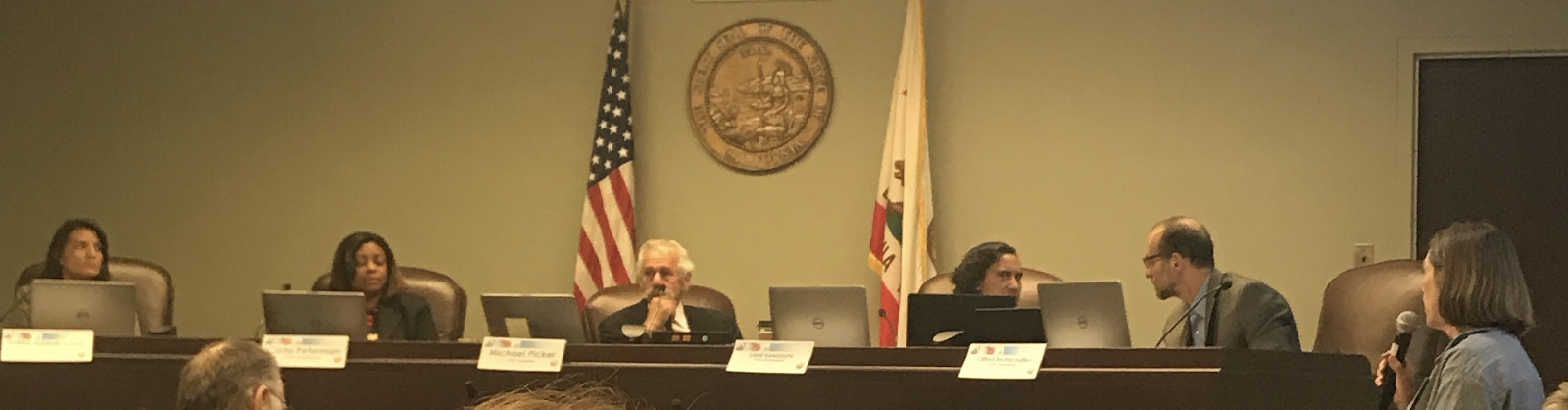

California Public Utilities Commission (CPUC) voting meeting on June 15, 2017

The Analogy

Let's talk for a moment about the U.S. energy mix. For the longest time, coal and oil were cheap, and they were easy. But there was a dark secret hidden in the black plumes of exhaust. The black plumes of exhaust were killing the planet. The industry was resistant to change, but eventually, we began to take small steps to change the energy mix. Many want to establish a national carbon tax or California-like cap-and-trade system to account for their negative externalities. This way, we can make room for natural gas and renewables. The goal: a cleaner energy system and thus, less environmental pollution.

One might say that we’ve become enlightened and see the overrepresentation of coal and oil in our energy mix as a negative. But still, progress is slow. We’re three-quarters century in, the planet continues to weep, and those who benefited least from the pollution look to be the ones who will bear the highest costs.

The Thesis

Hopefully, the analogy was apparent. Coal and oil represent our early approach to an energy portfolio, like how a mostly white (man) composition of powerful positions has been our approach to diversity (or lack thereof). The difference is, a lot of the world recognizes this overrepresentation of dirty energy as an issue and is working to correct for their negative externalities. While many of the elected offices, top universities, corporate leadership, etc., however, have not done the same for diversity.

One explanation could be that when the earth weeps, it literally storms, and there's nothing anyone can do to stop it. Whereas it’s sadly much easier for the powers-that-be to disenfranchise people and squash race riots and self-separatist growth when they are weeping.

I believe a more likely explanation could be the persistent conflation of accessibility and efficacy. It's not enough to open doors to diversity and hope that institutions will become diverse. We must account for the negative externalities that got us here in the first place. Some may not remember, but solar panels used to cost a whole heck of a lot. But many government subsidies and cheap manufacturing deals later, we now have solar panel-borne energy out-competing coal. This was/is not a passive process, and neither should be diversity. If diversity is the goal, we must put our money and energy where our mouth is to actively overcome the structural inequalities that have gotten us here: ahistorical policies, disparities in intergenerational human capital and wealth accumulation, and "intrinsic" privilege.

With every iteration, we need to look at our diversity mix and appreciate the signals it sends us. An overrepresentation of coal and oil in our energy generation portfolio mix means we have an environmentally mediocre mix. Likewise, a mostly white (man) composition of our positions of power can be a mediocre one full of untapped potential. In the U.S. context, wherever we see too many white people in positions of power, our Scooby Doo jinkies meter should be at peak. With changing demographics and a growing pipeline of talent, the laws of probability suggest that we are seeing a failure in the market whenever we observe this phenomenon.

That black plume can become clear if we go fishing (read: perform outreach) instead of leave with whatever turns up in our nets, optimize on equity instead of efficiency, and implement a plan to normalize diversity rather than let "the market" figure it out. And over time, we won't even need to subsidize diversity because it will out-compete overrepresentation on its own.


Notes: (1) Positions of power include the rungs on the ladder of mobility to said positions, including higher education. (2) Not everyone agrees on human-caused and/or -accelerated climate change as evidenced by the US's withdrawal from the Paris Climate Agreement. Those people don't see a problem with our divers—I mean, energy mix.


9.28.2018

[Salma Elmallah, ERG graduate student] 

Photo courtesy of Green 2.0

Every time I encounter an environmental organization, I can’t help but wonder, are they all this overwhelmingly white? I often find myself scanning rooms during talks or workshops and counting the number of minorities. I can usually fit them on one hand. I finally decided to look at the data to see if my firsthand experiences matched the realities of the entire field.

I found a 2014 study by Green 2.0, an initiative focused on racial diversity in environmental organizations, that found that racial minorities constituted less than 16% of boards and general staff of NGOs, government agencies, and grant making foundations, and their positions were concentrated in the lower ranks. As a point of reference, racial minorities made up 38% of the US population at the time of publication. In fact, the only position that minorities were more likely to hold than white people was that of the diversity manager, which only existed at a few organizations.


Photo courtesy of Green 2.0

Organizational leadership often self-reported that the biggest barrier to a more diverse workplace was a lack of minority and low-income applicants. At the same time, only a quarter of organizations in the study offered paid internships, which candidates from low-income backgrounds consistently cite a barrier to entry and advancement. Other minorities interviewed cited barriers like the absence of good mentorship, not being listened to by coworkers, and an institutional attitude that gender diversity - the gains of which primarily went to white women - was an adequate substitute for racial and class diversity.

What does it mean for environmentalism if the people shaping it are mostly white and middle class? For one, an organization’s prioritization of issues stems partly, if not heavily, from the people that compose it. Only 41% of NGOs interviewed in 2014 were likely to support adding issues of interest relevant to low-income or minority communities to their agendas. Employees reported across organizations that attempts to partner with local environmental justice groups were limited. Of the NGOs interviewed, people of colour were especially underrepresented in key decision-making positions, composing less than 5% of board slots and about 12% of leadership positions.

Environmental justice and grassroots organizations often perform better along diversity metrics. Mainstream environmental organizations on the national level benefit from having close ties to industry and government, oversight and monitoring capabilities, and strong, independent research arms. As long as mainstream groups have access to resources and influence that grassroots or environmental justice organizations do not, issues that impact low-income or minority Americans will receive limited attention on a funding and political agenda.


At some point during the long stretch between pitching this blog post idea to one of ERG’s patient and enduring blog editors, Anushah, and actually writing it, I was riding BART and noticed anti-immigrant ads plastered throughout Civic Centre Station. When I see bad things, I like to Google everything about them. So I looked up Progressives for Immigration Reform, the organization that funded the ads, and found out that one of their leaders almost succeeded at a 2004 effort to make anti-immigration candidates compose the majority of the Sierra Club’s board. An interview with a Sierra Club leader conducted around the time of the attempted takeover mentions that no red flags were raised about anti-immigrant candidates until 2004. This is strange because it was publicly known that one of the candidates who already had a Sierra Club board appointment during the takeover had also been sitting on the board of an anti-immigration organization for at least two years.

Photo courtesy of SFGate

I filed this discovery away in my head until I finally got around to writing this blog post, when the Sierra Club’s near-xenophobia resurfaced in my memory. I’m not sure how the Sierra Club came so close to having an anti-immigration majority board. It’s possible that, when your organization is dominated by a singular demographic, it becomes harder to recognize such seemingly obvious red-flags. They may never have had to recognize how racists mask their rhetoric with a resonant political message - like the “war on terror”, or being “tough on crime”, or, even, “the fight against climate change” - so voting for a candidate that relates environmental issues to immigrants and overpopulation doesn’t seem transparently xenophobic (even though discussions of population control have an undeniable racist history). Writing this blog post showed me that mainstream environmental organizations are in fact just as white and upper class as I was seeing. This comes at the expense of opportunities for individual employees, and the issues that are deemed important.

When I started this post, I was thinking about what a career looks like for someone whose demographic isn’t well represented in major environmental organizations. Maybe selfishly, I was thinking about what these statistics mean with regards to my imposter syndrome, or a sense of isolation, or career progression. I realized that the demographics of the environmental field can have implications for me, both as a prospective employee and as someone impacted by the agendas and policies. A discussion of environmentalism in the United States is incomplete if it doesn’t address how a lack of diversity informs how we define environmental causes, and how environmental causes can be mobilized.

11.14.2016

[Christopher Hyun and Emma Tome] 

This is the email that all current ERGies received on election night.

Equity and Inclusion Rally on Sproul Plaza, UC Berkeley (C. Hyun)

The students initiated an unanticipated ERG Town Hall the day after the presidential election in the department Reading Room. First-year graduate student, Emma Tome, wrote to all of us, eloquently expressing what many of us were thinking as that night progressed:
RE: Can we talk about this?
     Are we studying solutions to climate change and pressing environmental problems under an illusion of political inevitability?
     I'm writing before the returns come in because part of me hopes that the existence of political rationality is not yet completely foreclosed. But is it the assumption of rationality itself that has led us astray?
     Even if the non-climate change denying candidate manages to win, this remains a wake up call.
     I'm sure there are many think pieces underway that will far better explicate the phenomenon we are witnessing now.
     I'm here with many fellow students at Professor Harte's house. And in between checking competing returns on our phones we are puzzling over what our work in the department means.
     I will be the first to admit that I am new and naive to this work, it being my first term back in school. But this is also why I am asking for your collective guidance.
     Could we hold a town hall about the election in the coming weeks? It's not exactly about the election, but also the politics that underlie and motivate, implicitly or explicitly, the questions we might ask and the arguments we make, and dare I say, change we might achieve.
     Can we talk about this?
Immediately, the ERG community responded and organized a meeting with faculty, staff, students, post-docs, and visiting scholars the following day. We realized that we first needed to acknowledge what was going on in our community. We shared our histories, passions, realities, and concerns. We came out of this understanding that there is much to do within and outside of the scope of our individual academic work, within and outside of ERG, on and for both sides of this divided country. Our conversation still continues on day two and beyond via email, during ERG tea breaks, and butcher paper in the kitchen.

On butcher paper (C. Hyun)


The ERG executive committee of faculty, staff, and students has recognized the urgent need to reinforce and clarify ERG’s stance on inclusion and has put this preliminary affirmation on our homepage:
The mission of the Energy and Resources Group is education and research for a sustainable environment and a just society. ERG actively promotes intellectual, racial, ethnic, and gender inclusion; researches the impacts of equality and inequality; and celebrates diversity in our community.
The use of the word “inclusion” in this affirmation is purposive, so as to maintain space for those who are concerned about a sustainable environment and a just society but who may not often be perceived as a part of “diversity.”

This is in addition to the University of California’s official statement on the results of the presidential election by the UC president and chancellors:
In light of yesterday's election results, we know there is understandable consternation and uncertainty among members of the University of California community. The University of California is proud of being a diverse and welcoming place for students, faculty, and staff with a wide range of backgrounds, experiences and perspectives.  Diversity is central to our mission. We remain absolutely committed to supporting all members of our community and adhering to UC’s Principles Against Intolerance. As the Principles make clear, the University “strives to foster an environment in which all are included” and “all are given an equal opportunity to learn and explore.” The University of California will continue to pursue and protect these principles now and in the future, and urges our students, faculty, staff, and all others associated with the University to do so as well.
We are proud of what the University of California stands for and hope to convey that positive message to others in our state and nation.
Students, staff, professors, post-docs, visiting scholars taking the opportunity to meet during ERG tea (C. Hyun)

At ERG, we continue to meet and strategize during breaks and via email and Facebook. We encourage alumni, faculty affiliates, related programs across campus, California, and the US to reach out to us as well. We hope to have a stronger and more detailed statement ready in the near future and to keep the dialogue going.

In the meantime for more information, please contact an ERGie near you.


Note: The views expressed here belong solely to the author of each entry and are not representative of the position of the Energy and Resources Group, UC Berkeley. 

2.17.2016

 [Cecilia Han Springer, ERG graduate student] 

“What our students found was pretty shocking. In just a few short weeks, and without fancy statistics, they were able to highlight some major diversity-related problems on campus.” 

ERG students, in collaboration with groups across Cal, start a new data science course focused on diversity. ERG grad student, Cecilia Han Springer, shares their fascinating results and how they made this happen. For more information, please go to http://datadiversity.berkeley.edu.


Cecilia and Pierce at the Synberc's Expanding Potential Workshop

Our course started as a fledgling idea talked about in the ERG Reading Room. Before we knew it, Pierce and I were presenting before dozens of inspiring change-makers from all over the country. We never knew that our Data and Diversity project would go so far. 

Why data and diversity?

The first seeds of the Data and Diversity project were sown in an ERG Student Diversity Committee meeting. We were discussing the idea of “quantitative privilege,” wherein attention and funding tend to flow towards those who possess more quantitative skills and focus on quantitative methods.

Unfortunately, though, fluency with quantitative concepts often falls along lines of race, gender, and other identities, based on entrenched societal norms that affect students early on in their schooling. By graduate school, this disparity was already clear to us. Thus we asked the question: could we do anything to shore up these leaks earlier in the educational pipeline? Could we make sure that people of all backgrounds and identities feel comfortable with quantitative skills?

Around this time, Synberc announced a call for Seed Projects focused on increasing diversity in STEM fields, and it was clear to us that we might be able to do something impactful. We focused on data science for two reasons. First, it is a critical skill for both interdisciplinary and STEM research. Second, for better or for worse, quantitative data is very persuasive, and we thought we could use it to bring attention to diversity issues on campus.

Pierce leading a design thinking session

We began brainstorming about new ways to teach data science to a diverse group of undergraduates. Introductory computer science classes can be intimidating, and we saw the need to create a collaborative classroom environment that would foster diverse perspectives instead of intimidating them out of the pipeline. We also wanted to promote hands-on learning through analyzing data on diversity here at UC Berkeley, using new and innovative sources of data.

Each graduate student brought some unique skill to the class.

That was last spring in 2015. We worked all summer to design the class, with Yang Ruan (MS/MPP ‘15) building us a web platform and helping us choose a thought-provoking reading list. Current ERGies Grace Wu, Michaelangelo Tabone, and Pierce Gordon talked to groups all over campus — from the Berkeley Center for New Media to the Office of Faculty Equity and Welfare — to get their input on how to design the class. We recruited graduate students from Physics (Jesse Livezey), Integrated Biology (Dax Vivid), and ESPM (Guillermo Douglass-Jaimes) to help us mentor the students who would ultimately take the class. Each graduate student brought some unique skill to the class — from experience teaching Python to Pierce’s design thinking sills.


Ultimately, the Berkeley Institute for Data Science (BIDS) and the Berkeley Division of Equity and Inclusion (E&I) were happy to work with us as clients for the students’ data analysis projects. Anthony Suen, the Data Science Fellow from BIDS, was interested in promoting diversity and inclusivity for BIDS programs across campus, while E&I’s research analyst Andrew Eppig advised us on Cal diversity data sources and analysis.


The class

Our first class begins!

With seven extraordinarily bright undergraduates from a wide range of backgrounds signed up for the class, we started with the basic building blocks of data analysis using Python. Later we taught intros to data scraping and data visualization. Critical to the course, as well, was holding discussion sections on various themes around diversity, including microaggressions, stereotype threat, and unconscious bias. The Geoff Marcy scandal in the middle of the semester provoked a heated discussion on gender in STEM fields.

Once we laid these foundations, we drew from the field of design thinking to have brainstorming sessions on project ideas to apply our data and diversity skills to issues on campus. We went through several rounds of brainstorming — and hundreds of post-it notes — to generate as many creative and diverse ideas as possible. We then narrowed our ideas down to match the issues students cared about to the tools and data they had access to within the time we had in class.

Student presentation

What our students found was pretty shocking.

Toward the end of the semester, we let the students use class time to work on the projects they chose:
(1) the effect of “weeder” courses on diversity in STEM classes and
(2) where female applicants are leaking out of the faculty hiring pipeline.
What our students found was pretty shocking. In just a few short weeks, and without fancy statistics, they were able to highlight some major diversity-related problems on campus.

Student Project 1: Student diversity and “weeder” courses

The group analyzing weeder courses developed a list of criteria to identify the most notorious STEM weeder classes at Cal. They then used both the quantitative analysis of enrollment data and qualitative interviews to paint a stark picture of how weeder courses flatten diversity. Female underrepresented minorities suffered the greatest dropout rates while male non-underrepresented minorities had the lowest dropout rates — a trend that was consistent across all the weeder courses they analyzed.

They hypothesized that students from underrepresented backgrounds, in addition to being a visible minority in classes, also encountered a strong difference in prior experience with the subject as well as experience taking advantage of resources on campus (office hours, tutoring, etc.). To counter this problem, our students proposed miniintroductory STEM courses, a well-developed resource on finding fellow minorities in STEM courses, and increased diversity amongst GSIs.

"Weeder" course project graphs

Student Project 2: Gender and faculty

The group doing the gender and faculty analysis had similarly salient results. In developing their research question, they quickly found data to show that bias in hiring practices is NOT what is driving the gender disparity in faculty positions, as they had initially hypothesized. Rather, they saw a major difference in the number of female Ph.D. candidates graduating each year and the number of female applicants for faculty positions.

Women were self-selecting out of the academic pipeline. Our students designed a survey to find out why and sent it out to graduate departments across campus. They pulled in an impressive 478 responses, which they then analyzed qualitatively and quantitatively. They disaggregated responses by self-reported gender.

Gender and faculty graph

They found that, even when men and women expressed the same amount of dissatisfaction with a certain aspect of academia, many fewer women within that group intended to pursue a career in academia. Women reported higher dissatisfaction in the following areas: failure to connect with peers, lack of confidence, fear of consequences of having children, lack of representation in graduate school, stress, and unfair salary compensation.

Gender and faculty diagrams


The students’ research was well received.

Synberc, BIDS, the Division of Equity and Inclusion, and others who attended their final presentations were quite pleased with the work by our students. The faculty and gender study group went on to present their results at the Expanding Potential conference organized by Synberc in a presentation and a poster. Pierce and I also presented general lessons from the class at the conference.

The weeder courses study group is continuing to work with BIDS. At the Expanding Potential conference, Pierce also ran a design thinking workshop to get conference attendees to apply our methods to analyze diversity issues in their own institutions. The workshop was a great demonstration of how our class could be scaled to different settings.

Pierce at the design thinking workshop

We all learned a lot from running the course. We tackled a massive range of topics and methods, and while we may not have knocked every single one out of the ballpark, the stellar reception that the students’ projects received indicated some holistic level of success.

Still, if we do it again, we want to do it better.

It turns out that our original goals and our sub-goals flipped over the course of the semester. We originally focused on teaching data science, however, the diversity data projects ended up becoming the highlight because of how much our students were interested in them. From the feedback they gave us, students generally felt that readings and discussions were covered well, but the programming sessions could have been better planned. In the future, we intend to teach the data section better without sacrificing any of the perspective gained from exploring diversity issues in our discussions.

Do you want to be a part of the next round of Data and Diversity?

Or, do you want the course materials and syllabus for your own organization? If so, let us know! We’re in the midst of figuring out next steps and new ideas for the course, such as pairing students with private sector clients to analyze diversity within companies. We welcome your time, energy, and ideas!

Please email Cecilia.h.springer@berkeley.edu if you want to get involved.


Special thanks to all those mentioned in the article who helped with the course, as well as Shaila Kotadia and Kevin Costa at Synberc, and Duncan Callaway, our faculty sponsor at ERG.


7.08.2015

[Andrea Mercado, MS'15]


At times, our environmental enthusiasm can shine so bright that we overlook less clear implications against low-income and minority populations.

In Marin County, just north of San Francisco, the environmental preservation effort -- enabled by population density restrictions -- has resulted in the segregation of minority groups. The Marin Countywide Plan, adopted in 1973, originally set construction density minimums to as high as one single family residence per 25 acres of land. Zones closer to Highway 101 were designated for higher-density development, while the outskirting zones ranged from one single family residence per acre to 25 acres. The goals of the Plan “are concerned with preserving and enhancing open space, striving for a high quality in the natural environment, and preserving community character and architectural heritage,” (1996).

The first two goals sound perfectly peachy. Who doesn’t want to conserve the quality of the environment? But that last part about preserving the community sheds light on a slightly darker motive about preserving the community esthetic enjoyed by wealthy white residents. If there is one lesson we all know about economics is that lower supply and higher demands increase value. As of 2012, the average single family property value in Marin County has risen by over 72 percent (Zillow). By restricting the development density in Marin County, the Plan has essentially ensured that only wealthy people can afford to live in the county, and primarily in the outskirts. The small amount of multifamily and affordable housing is kept just off the freeway exits, and the people who live there are primarily service workers.

Source: Redefining Progress, Sustainable Sonoma County, Worldwide Fund for Nature, as quoted in the Marin Countywide Plan, adopted November 6, 2007.

In 2003, Marin County adopted the Housing Element into its general plan as required by the state of California. Compliance with the legal requirements to provide affordable housing resulted in the multifamily and affordable housing developed just off the freeway exits. As the Plan states, one of the goals was “to meet diverse housing needs linked to necessary services,” (2007) -- that is the people of color working low wage service jobs for wealthy, mostly white, residents.

This is not an isolated incident of oversight or (as some might argue) it may be blatant racism veiled behind a pro-environmental policy. Suburban environmental preservation density restrictions all over the U.S. keep low income people at a disadvantage or segregated into zones of lower environmental quality. Pair a rise in suburban property values with an increase in gentrification of inner cities, and low income families are left with no where to go.

While the preservation of the natural environment is a mission we as ERGies should always strive for, it is important to also uphold our mission to social justice by being critical of environmental policy and research by removing our green-colored glasses.


[Top Image: Brocken Inaglory]


Note: The views expressed here belong solely to the author of each entry and are not representative of the position of the Energy and Resources Group, UC Berkeley.
 
© ERG. Design adapted from Main-Blogger Blogger Template.